Hi, My name is Shijie, I come from China, I have lived in Singapore for over 6 years. I am from BBIS, UOW, and graduated from Nanyang Polytechnic. I am currently working on my FYP project, so I will be busy on most of the time, but I will still keep continuing update the blog and I wish this blog brings joy and kindness to you!
You may wonder why I choose the ‘City of Castle’ as the name of my blog. Well, this is because I travelled to Edinburgh, UK recently with my girlfriend. In fact, the photo you see on my home page as well as this page is took by me when I climbed to calton hill at the sunset. The city makes us feel unforgettable. It is beautiful, elegant and rich in culture. You will feel like having a time travelling once you reached Edinburgh as the city keeps most every 17th to 19th century Europe buildings, castles and landscapes, it is such a dramatic trip! And i will post my travelling on this blog soon.
Travelling
I love travelling. Besides Edinburgh and Singapore, I have travelled overseas to Australia many years ago. I have travelled to many places in China as well, including Guilin, Zhangjiajie, Wuhan, Guangzhou and Hainan. I like what travelling gives me, the sense of satisfaction, the curiosity of discovering the unknown places and most importantly, the wonderful experience, it helps to build a relationship with both people and nature.
Gaming
I am a gamer since I was a child. The day when my father brought me my first Playstation Protable, I have dived into this amazing gaming world. I have played the countless game so far, from traditional JRPG, FPS to MMORPG. Nowadays I have my PS4 and Switch, and I am still playing the games I like. My favourite game type undoubtedly will be RPG, cause I like to learn and dig the story of the game, as well as the story behind the game. Recently I am playing Death stranding and Monster Hunter World Iceborn, I will post the blog of the game soon!.
Sports Climbing
Sports Climbing has to be my favourite sports all the time. I have been doing climbing over a year and I got my lead verification on last year. Now I always climb at Onsight climbing gym, you can find me for almost every Thursday! By the way, that’s where I meet my love ~
Kay, the finance manager at a large company faces a dilemma. Robert, who is one of the Accounts Directors and a union member, has requested an 8 percent raise for his work unit. His request is based on recent finance reports showing that his department has substantially contributed to a 15 percent profit increase for the organisation. He feels that his team should be compensated for the hard work and long hours they have put in over the last few years to achieve this outcome.
Kay knows the value of Robert’s team and readily acknowledges their achievements. However, she knows that the company has plans to expand and diversify. This new project will use up the majority of the profit increase for at least the next five years. She is willing to sit down with Robert and talk about how his team can get involved in the new project. There could be new job opportunities, some overseas assignments, and possible promotions to various leadership positions within the new project. Kay has flagged this with Robert; however, he is adamant that his team needs to be compensated with a monetary increase. He went as far as threatening to get the union involved if his request is unsuccessful.
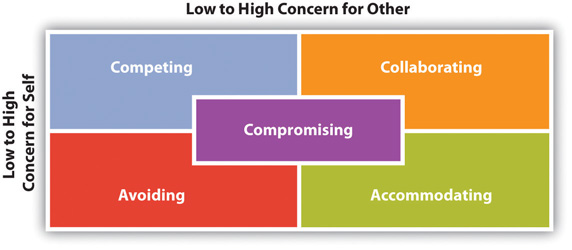
One of the types of conflicts that this scenario demonstrates is competing. The competing style is where one party cooperates to maximize its results at the expense of Robert’s needs and style. At the outset Robert was not hesitant to explain or follow another path as to why Kay declines the pay increase. Moreover, with a further threat to get the union involved, he disregarded alternative solutions from Kay and even doubled his terms of currency rewards.
The integrative approach is used by Kay. It is a collective strategy and a competitive distributive approach. This supports a win – win outcome and is used when both sides are very concerned about the outcomes. It shows that although Kay might have just refused to respond to Robert, she wants to discuss the situation with him, as she also accepts Robert’s team’s efforts and is prepared to discuss possible options.
Bargaining approach
There are two negotiations, distributive and Integrative.
Distributive
It ensures that your goal is to bargain so that you give up less than the other side when you reach an agreement. Your goal is to win as much as possible during the talks, and that typically means that someone else will give up everything.
Integrative
That means that you compromise to incorporate the desires, the expectations, the worries and the interests of the other person into the equation. You are looking for a compromise where both sides must give up something to finalize the deal, to build a win – win scenario, rather than just worrying about losing less than the other side.
Robert uses distributive negotiations in this case. Robert’s argument is supported by claims that his working unit has significantly contributed to growth of the company and therefore their years of hard work should be rewarded. He improves his position and takes the opposite side of the interests of Kay. At the same time it is not imaginative either, because he has only one demand and even when the boss confronted him it doesn’t alter. It is clear that he does not know for his ties with the company as he threatens to imagine the union if his demands are not met.
Interpersonal Communication
The attitude leads to the bad workforce. Robert as he is not positive, is the main reason why the working environment is bad. Robert’s proposal was very specific and never saw any other rewards than himself and his family. The argument that he can accept is also very on the side. In addition, listening and comprehension are the crucial elements which affect teamwork. Robert doesn’t listen to Kay in this situation at all. He insists only on what he needs and does not look at the bigger picture. It leads to poor employment conditions as Robert’s conduct may be carried out with his own team where he may not care and just do it his own way. This can affect his team cohesion and potentially lead a team that does not work well.
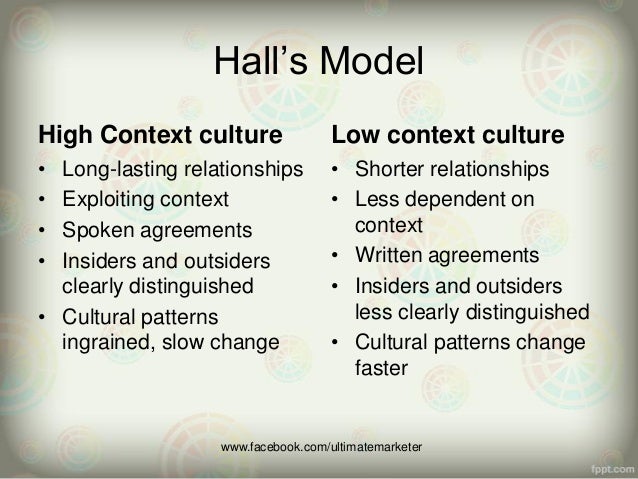
Robert is considered to be a person with a low context culture in accordance with the Edward Hall context model. The world Kay listed, which was the organization and his Staff, was not Robert’s concern. In a simple and direct verbal way he introduced his target, which is a modell with a low sense. He had no other choice and didn’t care about the company’s social status, and was free to do what he wanted, because he was ready to take part in the union.
There is no shortage of common cultural assumptions about social groups, ranging from “girls fail in maths” and “men are so ignorant” to “he gets a bit senile with age” or “black people failing in college.” At some point you have probably heard most of these cases. Stereotypes are, in essence, very similar to air: invisible but ever present.
Stereotypes are stereotypes placed on groups of people by virtue of race, ethnicity and sexual orientation. Such attributes appear to be oversimplifications of the groups involved, and while some people truly reflect the traits of their representations, they are not necessarily representative of all people within that community. Stereotypes are often not reliable and can be negative even if they are positive.
In the modern workplace, many gender and racial stereotypes remain. As such, organizations should tailor contact of poorly informed assumptions for gender or ethnic internal audiences. Such fails to connect will lead to an inability to inspire, advise and raise awareness about resources that can impact professional development. Stereotypes also affect how reviews from those markets are obtained from the business.
Impact on business opportunity
Stereotypes may also influence the reaction of the communicators to their listeners, workers may be irritated with those they find to be hostile or stereotypically uncooperative. An employee can also address someone with positive stereotypes differently than a person with negative stereotypes. Such actions may make some administrators feel less agreeable, for example at private meetings, and then they may find it uncomfortable to delegate more challenging work to their workers.
Impact on interpersonal relationship
Business leaders will make predictions on the capabilities of employees based on the divisions they work in. Leaders may rely on assumptions in order to believe, for instance, that employees of the entry-level call center or line manufacturing workers are less well trained or knowledgeable in information than others at the organization. This can lead to a lack of contact with those groups and of in-depth information that can be used by staff to enhance their performance. Similarly, workers below can identify senior officials as detached and unselfish in worldly information.
Impact on international relationship
Most organizations train staff on the conduct of contact in both domestic and international markets. Nevertheless, if it is based on assumptions, this preparation may have negative effects. The example of companies operating as a company consultancy in Italy is used by Communicaid. While in Frence cultural standards require much looser scheduling than in the United States, not all French tolerate late start-up meetings or timely supplier meetings. As a result, businesses that educate workers to follow traditional habits risk customer attack.
My past experience
It happened when I was study in secondary school. One of my classmate – Nick, his wallet was missing after we had lunch at school. After he realized his wallet is gone, he immediately doubt one of my other classmate who is indian, and believe that he stoled his wallet. He even argued with him, there were almost a fight happend between them. But in the end, our physic teacher find his wallet which accidently dropped in the lab.
The reason he believe so confidently that the indian classmate stoled his wallet is because his phone was stoled by a man who is indian before. This create a stereotype in his mind which makes him think that if his personal belonging is lost, it is definitely stoled by indian. At last, he applogized to that classmate and he also willing to change his stereotype.
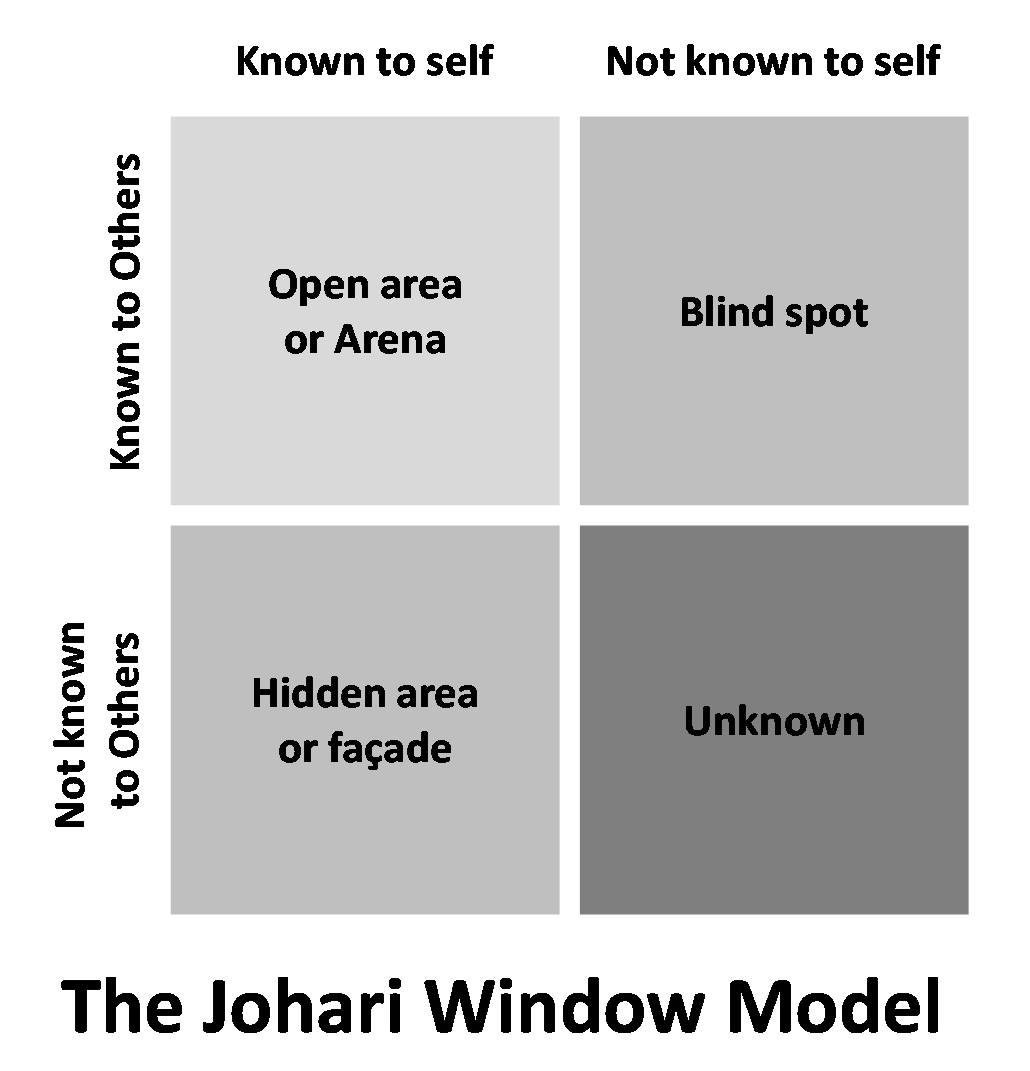
The concept of Johari windows is used to enhance the understanding of the person about others. This model is based on two ideas: trust can be gained through knowledge and feedback on others about you. Each individual has four quadrants or window panels to represent the Johari model. Each window shows personal information, feelings, motivation and, from four points of view, whether this information is known or unknown to yourself or others.
This paradigm interprets the approach of communicating and recognition feedback. A Johari is shown as a common four-panel window. Two of these panes are the self and the other two are the unknown component of themselves but of others. Information is transferred from one pane to the next because of mutual trust and feedback from the other group members can be obtained through socialization.
Open Area or Arena
All communication takes place in this arena by means of a two-way process. So that the participant socializes with others and provides input regularly from the other members of the group. It results in a more successful group, with a highly dynamic interaction in this group.
2. Blindspot or BlindSelf
Blindspot is the place where some of the characteristic knowledge is identified but you are not sure of it.
3. Hidden Area or Hidden Self
The details you conceal from others is the hidden area. There, you know the detail, but other information is not understood.
4. Unknown Areas or Unknown Self
In this area, the information is unknown to you as well as the others. Generally, certain feelings, talents, information, etc fall in this area.
Analysis from Johari Table
Johari table with MarcusJohari table with Nigel
The above Johari tables are completed with my friends Nigel and Marcus who are also my classmates in same course. I think 80% of the attribute listed are correct, for example Marcus think that I am a quiet person which is true because I am not a very talkative person and usually I will keep quite in the class room or during some conversation. Nigel thinks that I am a calm person as I am not nurvous to some thing even if it’s deadline is approching, the reason is because I think nurvous can not resolve the problems so that I often try to find the correct way rather than just being nurvous.
However, there are some attributes that I did not expecte in blind spot area. Marcus think that I am a introverted person. I think is because I am quiet and not talk very often. But actually I am a quite outgoing person in outside of the school which aslo proved in Nigel’s point, Nigel think I am a extroverted person in blind spot are.
How Johari model will help the communication in team?
The Johari Window outcomes help us to understand how other people perceive us, how we portray ourselves and how well we know ourselves. The findings will affect what happens in our lives because of our consciousness of ourselves and our consciousness of ourselves. The members of a team can first know about what the features are and can then change the way they work together to make sure there is no flaw in the process. By comparison to others with few open areas, it’s harder for them to get along with their leaders. They’re difficult to communicate with and they’re not running well. As for myself, It helps me to know my strength and weakness that I can strengthen in myself to interact more efficiently and effectively with you and others. I am more comfortable with my surroundings and how my conduct can change their opinions about myself and can work towards a better understanding and interaction with other people and groups.
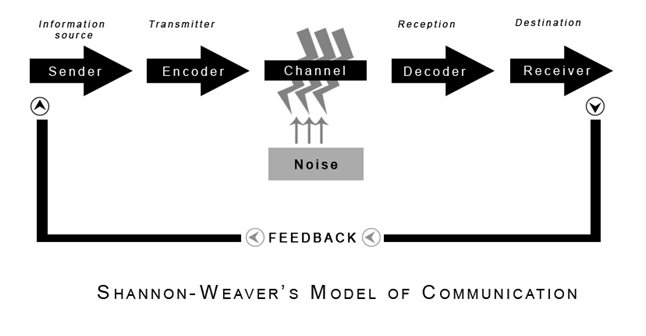
The communication model Shannon and Weaver consists of six concepts: sender, encoder, wave, decoder, receiver, noise. The sender relates to the data source, which codes and sends the message via a sender. The recipient then decodes and receives the message. The nature of physical stimuli (noise) influences how easily the message is conveyed. The receiver sends a reply to the sender after receiving the message and the correspondence cycle continues.
Since Shannon was an engineer, this model was first developed to improve technical communication, primarily in telephone communication. It was designed to maximize telephone efficiency by reducing noise. Weaver later applied it to the development of effective communication for all kinds of communications and the model became famous as the Shannon Weaver model. Shannon’s model is also called information theory in engineering, and is used academically to calculate transmission through machines and has a formula as well.
Before we discuss the detail, lets take a look at the example of the communication model.
“I want you to come here,” Jacky called his friend. Noise appeared during his call, and his friend just got “I like.” Once, Thomson’s assistant asked “what would you like Jacky?”From this example, The sender is Jacky, encoder is Jacky’s telephone, channel is through telephone cable, noise will be the distraction voice in the phone, the reception and receiver are his friend’s telephone and his friend. We can observe from example that the noise did actually affect the quality of the communication or the channel of the communication.
This example shows the 3 main problems in communication – a technical problem which indicates how channel cause problems, usually caused by some physical reasons or error. The semantic problem, which means the message means different when it transmitted between sender and receiver. Effectiveness problem, which indicates how effective the information or message affect the action. As the observation shows that the model clearly points out the critical factors which affect communication. Furthermore, The noise concept helps to make communication effective through the removal of noise or noise problems, and in the Shannon Weaver model, correspondence is taken as measurable.
Meanwhile, Shannon-weaver’s model is not perfect, in fact, it comes with many doubts and criticisms. One of the points says, more than social correspondence and mass communication, it can be used for interpersonal communication, which will be more effective. Hence, as the recipient plays the main role in sending messages, the receiver plays the passive part in the communication process, who can only get the wrong message if the channel is affected by noise and there is no effective method to resolve the conflict. As for sender, compared to the messages sent by the sender, feedback is considered less important and some opponents view the model as “a deceptive misrepresentation of the nature of human communication” since human communication does not have a quantitative form.
Conclusion
In conclusion, each step in the model of the cycle of communication is important, and nobody can basically miss it. The sender and the beneficiary can communicate more efficiently, understand each other better, and respond more strongly by paying attention to all components. Although Shannon-weaver’s model has many flaws, as the basic model of all the model, it still inspires the investigation of many future models. It is simple and straightly gives the people how to improve the effectiveness of communication and how to minimize the chances that error happens during the communication.


:max_bytes(150000):strip_icc():format(webp)/what-is-the-meaning-of-stereotype-2834956_FINAL-05748635242b44c0818e493b4568bc2f.png)



 City of Castle